
Find Your Voice. Write With Confidence.
From essays to AP prep to creative storytelling, I help middle school through college writers build real skills, real confidence, and a voice that’s actually theirs.
Writing Support That Actually Works
(For Real Students, Not Perfect Ones)
Most students don’t struggle because they’re “bad writers.” They struggle because no one has shown them how to write in a way that makes sense to them. That’s where I come in.
Strategy Over Guesswork: No more staring at a blank page. Students learn how to start, structure, and develop their ideas step-by-step.
Feedback That Makes Sense: Not red ink. Not overwhelming edits. Just clear, supportive feedback they can actually use.
Confidence First: Strong writing starts with confidence. Students learn to trust their ideas and build skills that stick.
Voice Over Perfection: We’re not chasing perfect essays—we’re building real writers with voices that sound like them, not a template.
Because writing isn’t about getting it “right” the first time—
it’s about learning how to think, revise, and grow.

Choose Your Path
Every writer learns differently, and growth doesn't happen in a single way or at a single pace. I offer flexible support options designed to meet students where they are—whether they need individualized guidance, the motivation of learning alongside peers, or resources they can return to again and again. The goal is always the same: steady progress, growing confidence, and writing that feels manageable and meaningful.

LIVE PRACTICE
Workshops
Skill-based workshops that help students analyze, organize ideas, write stronger essays, and approach writing with confidence.
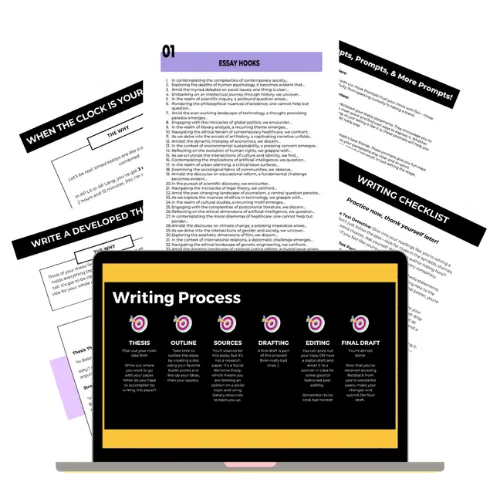
COURSES & RESOURCES
Writing Studio
Writing courses & digital resources with hands-on instruction & writing practice for MS, HS, and college students.
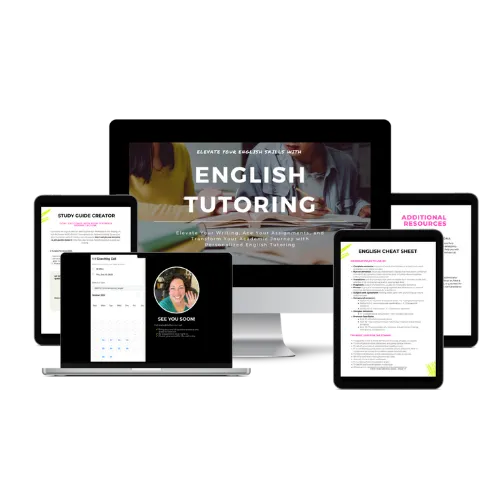
1:1 SUPPORT
Writing Mentorship
Personalized support for essays, AP writing, and academic skills- all tailored to your student’s individual needs and pace.
From Stuck to Confident Writers
Over the years, I’ve worked with students at every level—from reluctant writers to AP and college students. Here’s what that growth looks like.
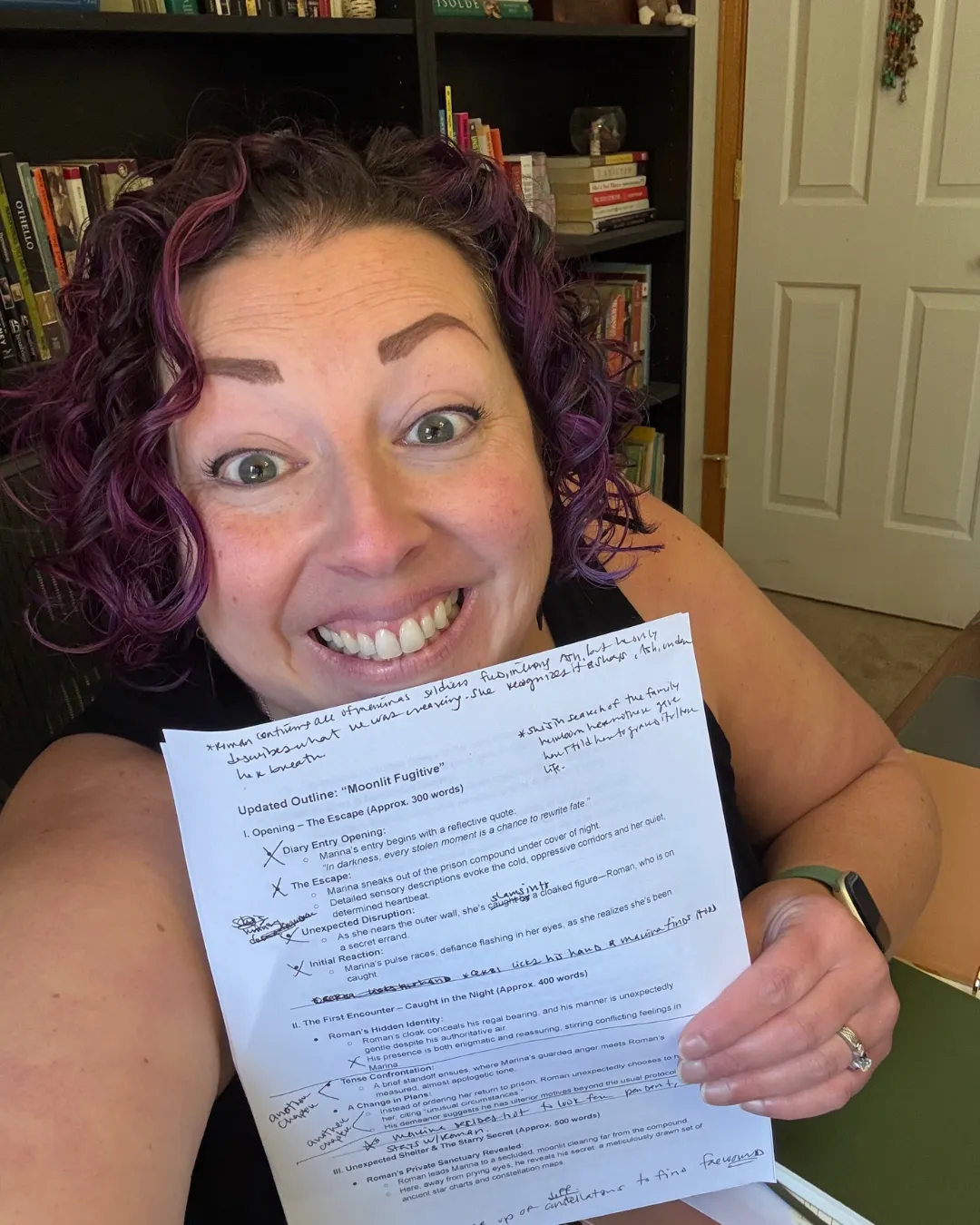
Hi, I'm Diana!
I work with writers the way writing actually happens: through practice, patience, and encouragement. Instead of focusing on perfection or quick fixes, I help writers learn how to start when writing feels hard, revise without getting overwhelmed, and build confidence through steady progress. My goal is to make writing feel more manageable and to help writers trust themselves in the process.
With over 17 years of experience supporting middle school, high school, and college writers, I've seen that confidence grows when writers feel supported, not pressured. Whether we're working on essays, analysis, or creative projects, I offer clear guidance, thoughtful feedback, and practical strategies writers can return to again and again. Writing With Diana is a supportive space where writers are encouraged to try, revise, and grow—one draft at a time.
Start Here
Stop Summarizing. Start Thinking
Struggling with writing doesn’t mean a student can’t write. It usually means they don’t know what to do next. This FREE workbook helps uncover the missing steps, build confidence, and make the writing process manageable.
Writing With Diana: A Blog for Writers
If writing ever feels confusing or frustrating, writers aren’t alone. Writing With Diana helps writers build confidence and real writing skills through clear guidance, real examples, and strategies that actually work.
Why Your High School Student Can Explain the Text but Struggles to Write the Essay
Why Your High School Student Can Explain the Text but Struggles to Write the Essay
Your teenager can talk about a novel, question an author’s argument, and explain why a character’s decision makes no sense. Then they sit down to write an essay for Honors English or AP English Language and Composition, and the paragraph barely captures what they said.
If you’re searching for help with high school essay writing, this gap may look familiar. Your child understands more than their writing shows, and “Just write what you told me” isn’t getting them very far.
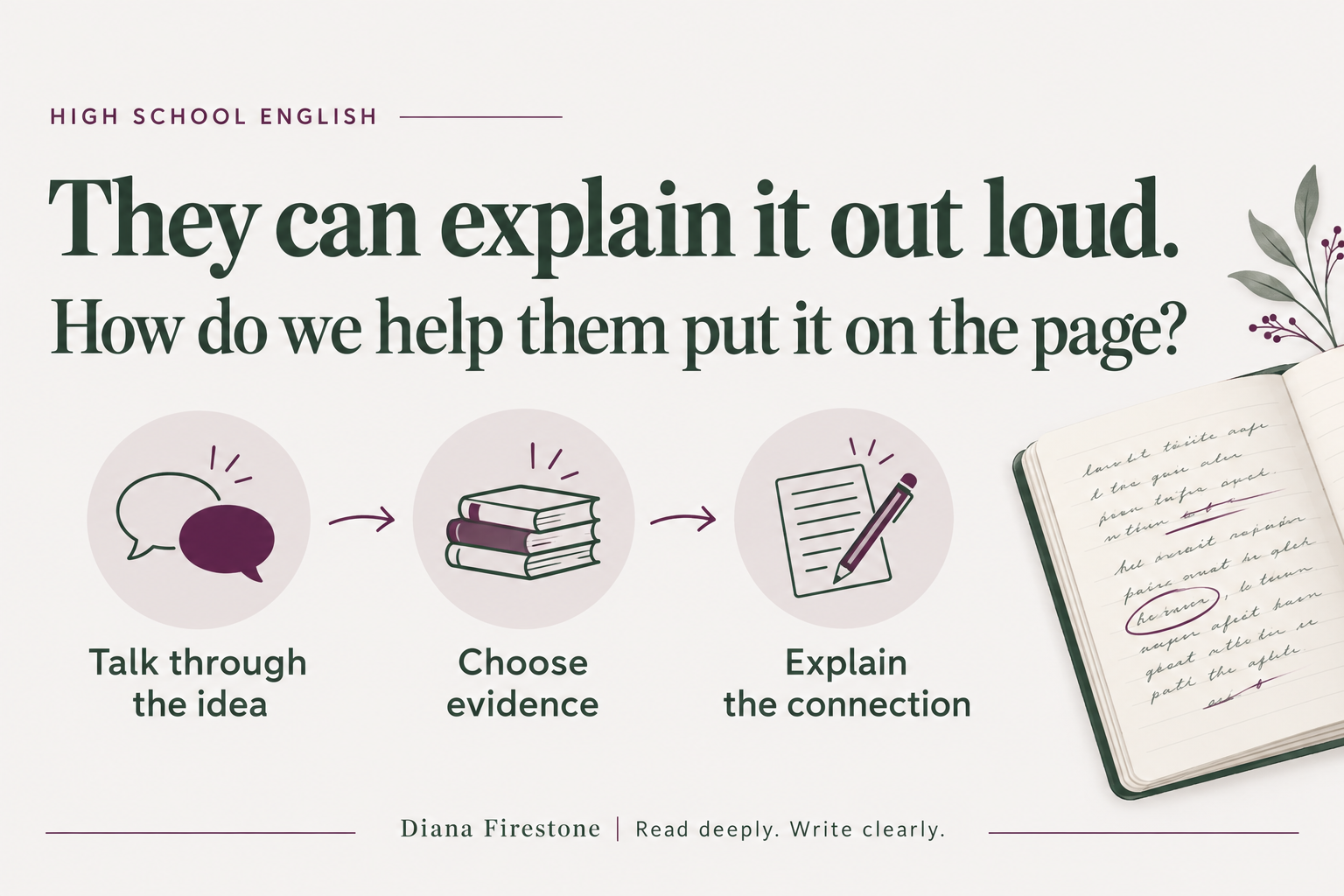
In my work as an English teacher and writing coach, I pay attention to that gap. A thoughtful spoken response gives us something to build on. Students still need to learn how to turn that response into a focused claim, choose useful evidence, and explain their reasoning on the page.
Why High School Essay Writing Can Feel Harder Than Class Discussion
In conversation, students have a listener helping them along. We ask questions, fill in context, and give them room to circle back. A student might say, “He was being selfish,” and gradually explain who “he” is, what he did, and why it matters.
On the page, the writer has to provide those connections.
An analytical paragraph asks students to do several things at once:
Understand the text and the assignment.
Develop an interpretation or argument.
Choose evidence that supports it.
Explain how the evidence connects to the claim.
Organize those ideas into clear sentences.
Students are also managing word choice, grammar, and punctuation. If they’re editing every sentence before they know what they want to say, writing can become slow and frustrating.
Before I offer a sentence starter, I want to identify the difficulty. Does the student understand the passage? Have they developed an idea? Can they explain how their evidence supports it? Each answer points to a different next step.
That distinction matters. A student who needs help understanding a passage needs different support from a student who has a strong interpretation but struggles to organize it.
Helping English Students Move Beyond Plot Summary
In English, students may be able to explain what happens in a novel but struggle to analyze its significance.
For example, “Victor refuses to listen to the creature” describes a character’s action. A paragraph needs to go further: What does that refusal suggest about Victor? How does it contribute to the novel’s treatment of responsibility?
I start with questions small enough to answer:
“What does the character do or say in this scene?”
“What does that detail suggest?”
“How does it connect to the idea you’re trying to explain?”
If the student cannot answer the first question, we return to the passage. If they can describe the action but struggle with its meaning, we consider possible interpretations and check them against the text.
The adult’s job is to ask a useful question and give the student room to think. It can be tempting to supply an interpretation when a student hesitates, but that hesitation is often where the thinking needs to happen.
Literary Analysis Example: From a Broad Idea to a Focused Claim
Imagine a student working with the confrontation in Chapter 10 ofFrankenstein. This is a model conversation, rather than a quotation from the novel.
Student:“Victor is irresponsible.”
That may be a defensible interpretation, but it is too broad to guide a paragraph. I would ask which part of the scene leads the student to that conclusion.
Student:“He condemns the creature before hearing his story, even though he’s the one who created him.”
Now the student has identified a particular action and a tension worth exploring.
Teacher:“What does that suggest about how Victor sees his responsibility?”
Student:“He wants to reject the creature instead of dealing with what he owes him.”
That explanation can become a working claim:
Victor’s immediate rejection of the creature suggests that he treats creation as an achievement without accepting the continuing responsibilities it brings.
The student would then choose a specific quotation or detail from the scene and explain how it supports that interpretation. The key is to make the reasoning visible: How does Victor’s response reveal the limits of his sense of responsibility?
A useful claim gives the paragraph a direction. Evidence and explanation still have to establish that the interpretation holds up.
This is an important part of learning how to write literary analysis. Students need practice moving from an observation about a character to an interpretation they can support.
Helping Students Explain Rhetorical Choices
Composition asks students to work with nonfiction arguments as well as their own writing. In a rhetorical analysis essay, students need to explain how a writer’s choices contribute to the writer’s purpose within a particular situation.
A student might identify repetition or emotional language but stop before explaining what that choice does.
For example:
“The writer uses repetition to persuade the audience.”
That sentence names a choice and a general goal. It leaves out the reasoning.
I ask:
What language is repeated?
What idea does the repetition emphasize?
Who is the audience?
How might that emphasis influence this audience’s understanding or response?
How does that response connect to the writer’s purpose?
These questions help students develop commentary that is specific to the passage. Naming a rhetorical device gives them a starting point; they still need to explain why that choice matters here.
Rhetorical Analysis Practice Example
Consider this invented sentence from a hypothetical speech asking school board members to fund repairs:
“Our students need safe classrooms. Our students need working heaters. Our students need a school that is ready to welcome them.”
A student might begin with:
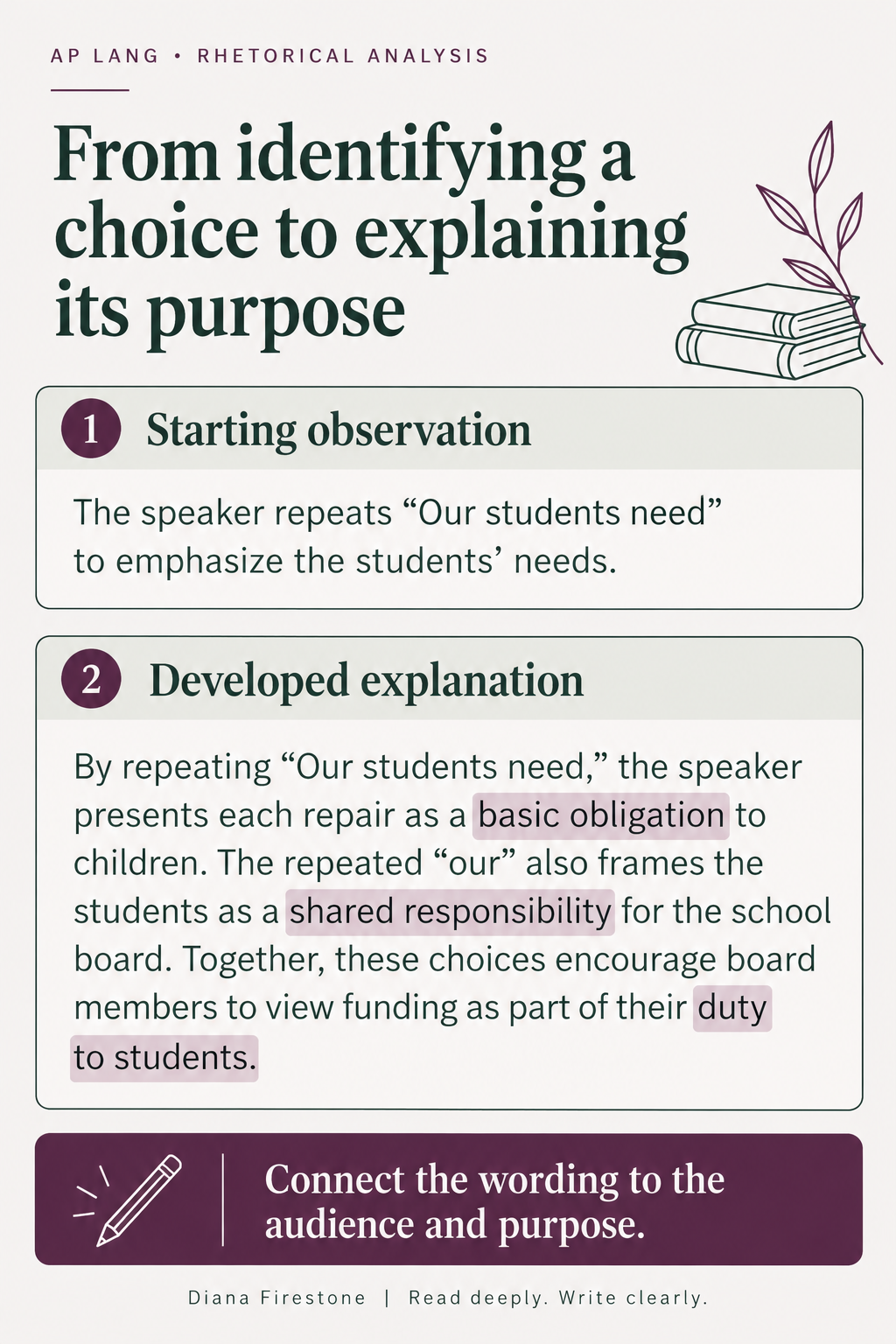
“The speaker repeats ‘Our students need’ to emphasize the students’ needs.”
That’s accurate, but it mostly restates the pattern. A more developed explanation might read:
By repeating “Our students need,” the speaker presents each repair as a basic obligation to children. The repeated “our” also frames the students as a shared responsibility for the school board. Together, these choices encourage board members to view funding as part of their duty to students.
The explanation connects the wording to this audience and this purpose. It offers a plausible interpretation without claiming that every listener will respond in exactly the same way.
When students need AP Lang essay help, this is often where I focus: moving from identifying a rhetorical choice to explaining its function.
A Ten-Minute Writing Practice You Can Try at Home
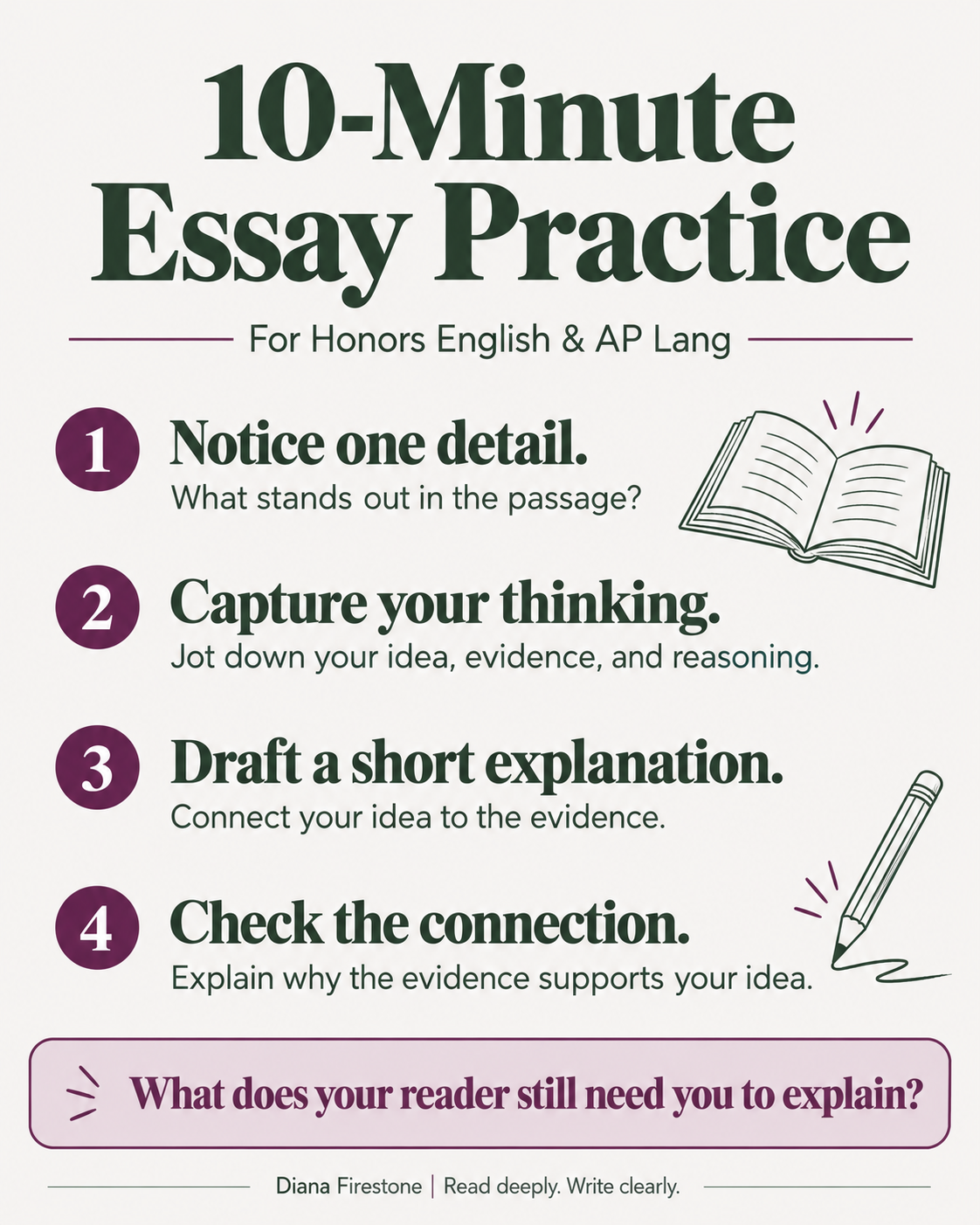
You don’t need to assign another full essay to help your teen practice. Use a short passage they are already studying and keep the task to one idea and a few sentences.
1. Ask for One Observation
For a novel, ask:
“Which action or line stands out, and what might it reveal?”
For an AP Lang passage, ask:
“Which choice in the writer’s language stands out, and what might it help the writer accomplish?”
If the answer is broad, ask your teen to point to the specific words that prompted it. Give them time to reread and think before offering another question.
2. Capture Three Short Notes
Have your teen jot down:
Their claim.
A supporting detail or quotation.
Why that evidence supports the claim.
For the hypothetical school board speech, those notes might look like this:
Claim:The speaker frames repairs as a responsibility to students.
Evidence:Repetition of “Our students need.”
Explanation:“Our” emphasizes shared responsibility, while “need” presents the repairs as essential.
These notes preserve the thinking before the student has to manage polished sentences.
3. Draft a Short Explanation
Ask for three or four connected sentences: the idea, the evidence, and the explanation linking them.
If your teen needs a starting point, try:
“This detail suggests ___ because ___.”
For rhetorical analysis, try:
“By using ___, the writer emphasizes ___, which supports the purpose of ___.”
These are temporary supports. Encourage students to adapt the wording to fit their actual thinking. If the sentence frame produces a vague explanation, return to the passage and the idea.
4. Revise the Reasoning First
Read the draft together and ask:
“Have you explained why this evidence supports your idea?”
If the explanation repeats the evidence, return to the spoken response. If the evidence does not support the claim, reconsider the evidence or adjust the claim.
Keep this practice focused on developing the explanation. Grammar and punctuation can receive attention in a separate editing pass.
Separating those tasks gives students a chance to work on the thinking before getting caught up in every sentence correction.
What Helpful Writing Feedback Sounds Like
“Add more detail” often leaves students guessing. I try to name the work the paragraph needs.
For literary analysis:
“You say he feels guilty. Which words or actions suggest guilt?”
“You’ve explained what happened. What do you think it reveals about her?”
“How does this scene support your idea about responsibility?”
For rhetorical analysis:
“What idea does this repetition emphasize?”
“Why might that idea matter to this audience?”
“How does the wording support the writer’s purpose?”
Specific questions make revision more manageable. They also give students questions they can eventually ask themselves.
You can acknowledge what is working, too: “Your claim is clear, and this quotation fits. Now we need to explain the connection.” That helps the student see revision as a defined task instead of a judgment on the entire paragraph.
When High School English Tutoring Can Help
If your teen repeatedly understands a text in conversation but cannot develop a written response, it helps to identify exactly where the process breaks down.
They may need support interpreting the passage, narrowing a thesis, selecting evidence, organizing a paragraph, or developing commentary. “Work on your writing” is too broad to guide that practice.
In my high school English tutoring, we work through those decisions together. Students practice explaining their ideas, testing them against the text, and revising so a reader can follow their reasoning. As they gain confidence, I reduce the prompts and ask them to make more of those decisions independently.
The goal is for students to carry useful questions into their next assignment: What do I think? What supports it? What does my reader need me to explain?
A thoughtful conversation can show us that an idea is already there. With focused practice, students can learn to develop that idea into writing that reflects what they understand.
Looking for support with Honors English, literary analysis, or AP Lang essay writing? Explore my English classes and one-to-one tutoring.

Frequently Asked Question
General Questions
What subjects do you offer tutoring in?
I offer English tutoring across all grade levels, from middle school through college, including AP Lit and AP Lang test preparation and support in key areas such as reading comprehension, academic and creative writing, grammar and composition, rhetorical analysis, and research skills.
Are sessions conducted online or in-person?
All tutoring sessions and live classes are online.
Can I customize the tutoring schedule?
Yes! I offer flexible scheduling to fit your availability, ensuring that learning fits seamlessly into your student's routine.




© 2026 Diana Firestone Term & Conditions Privacy Policy Disclaimers