
Find Your Voice. Write With Confidence.
From essays to AP prep to creative storytelling, I help middle school through college writers build real skills, real confidence, and a voice that’s actually theirs.
Writing Support That Actually Works
(For Real Students, Not Perfect Ones)
Most students don’t struggle because they’re “bad writers.” They struggle because no one has shown them how to write in a way that makes sense to them. That’s where I come in.
Strategy Over Guesswork: No more staring at a blank page. Students learn how to start, structure, and develop their ideas step-by-step.
Feedback That Makes Sense: Not red ink. Not overwhelming edits. Just clear, supportive feedback they can actually use.
Confidence First: Strong writing starts with confidence. Students learn to trust their ideas and build skills that stick.
Voice Over Perfection: We’re not chasing perfect essays—we’re building real writers with voices that sound like them, not a template.
Because writing isn’t about getting it “right” the first time—
it’s about learning how to think, revise, and grow.

Choose Your Path
Every writer learns differently, and growth doesn't happen in a single way or at a single pace. I offer flexible support options designed to meet students where they are—whether they need individualized guidance, the motivation of learning alongside peers, or resources they can return to again and again. The goal is always the same: steady progress, growing confidence, and writing that feels manageable and meaningful.
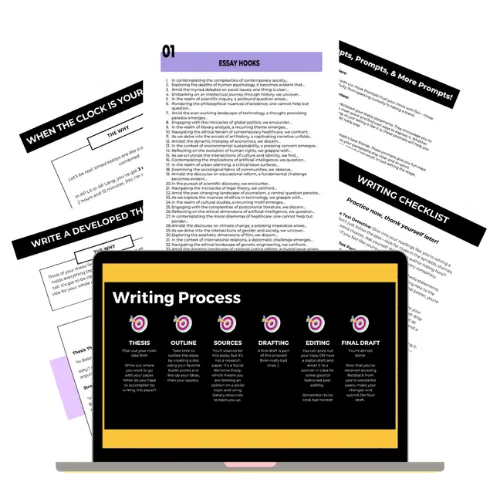
COURSES & RESOURCES
Writing Hub
Writing courses with hands-on instruction & writing practice for MS, HS, and college students.
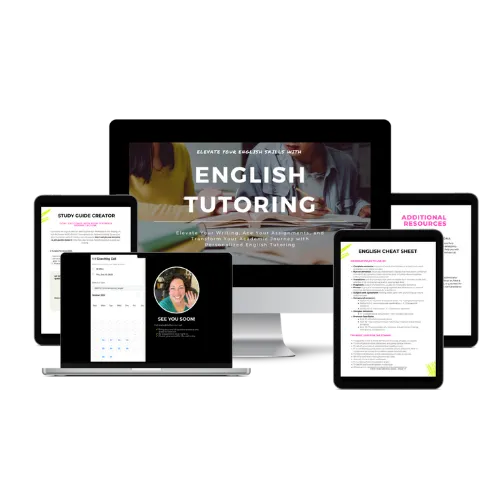
1:1 SUPPORT
Tutoring
Personalized support for essays, AP writing, and academic skills—tailored to your student’s needs and pace.
MONTHLY RESOURCES
Patreon
Weekly writing prompts & monthly writing resources designed to help students build confidence
ASYNC EDITING
Feedback
Academic editing and personalized feedback to strengthen clarity, structure, grammar, and writing quality.
From Stuck to Confident Writers
Over the years, I’ve worked with students at every level—from reluctant writers to AP and college students. Here’s what that growth looks like.
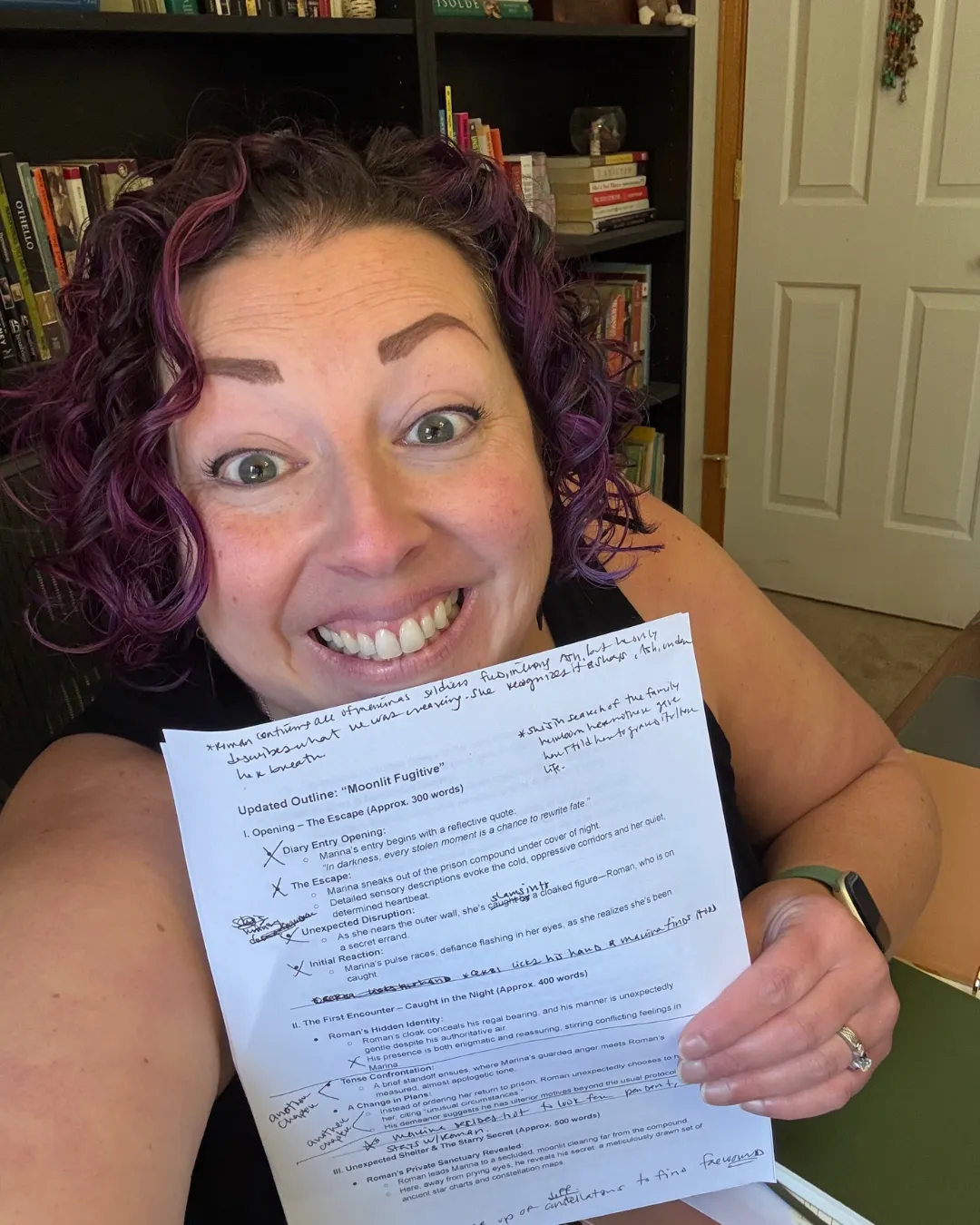
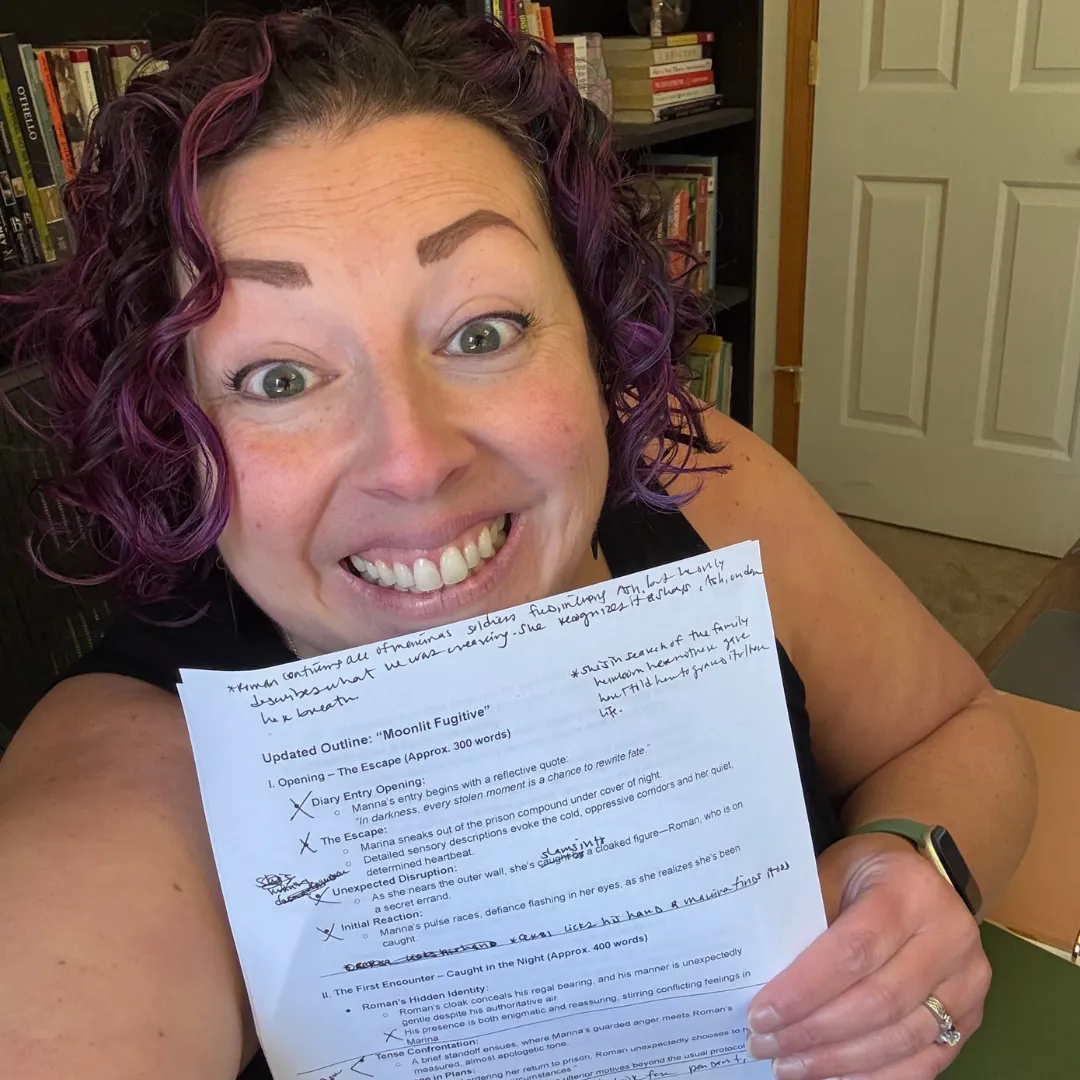
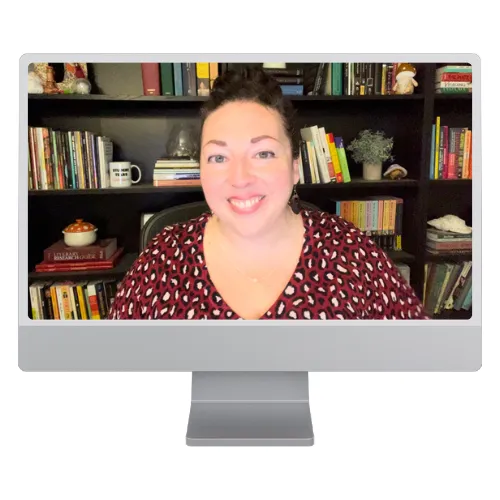
Hi, I'm Diana!
I work with writers the way writing actually happens: through practice, patience, and encouragement. Instead of focusing on perfection or quick fixes, I help writers learn how to start when writing feels hard, revise without getting overwhelmed, and build confidence through steady progress. My goal is to make writing feel more manageable and to help writers trust themselves in the process.
With over 17 years of experience supporting middle school, high school, and college writers, I've seen that confidence grows when writers feel supported, not pressured. Whether we're working on essays, analysis, or creative projects, I offer clear guidance, thoughtful feedback, and practical strategies writers can return to again and again. Writing With Diana is a supportive space where writers are encouraged to try, revise, and grow—one draft at a time.
Popular Resources
Resources for Writers
Guides, activities, and tools designed to support students and educators beyond live instruction. Browse downloadable resources including writing practice materials, creative prompts, and academic supports to reinforce learning at home or in the classroom.

Show It Like You Mean It
Help your writer master show, don’t tell and use vivid details that bring stories to life and keep readers engaged.
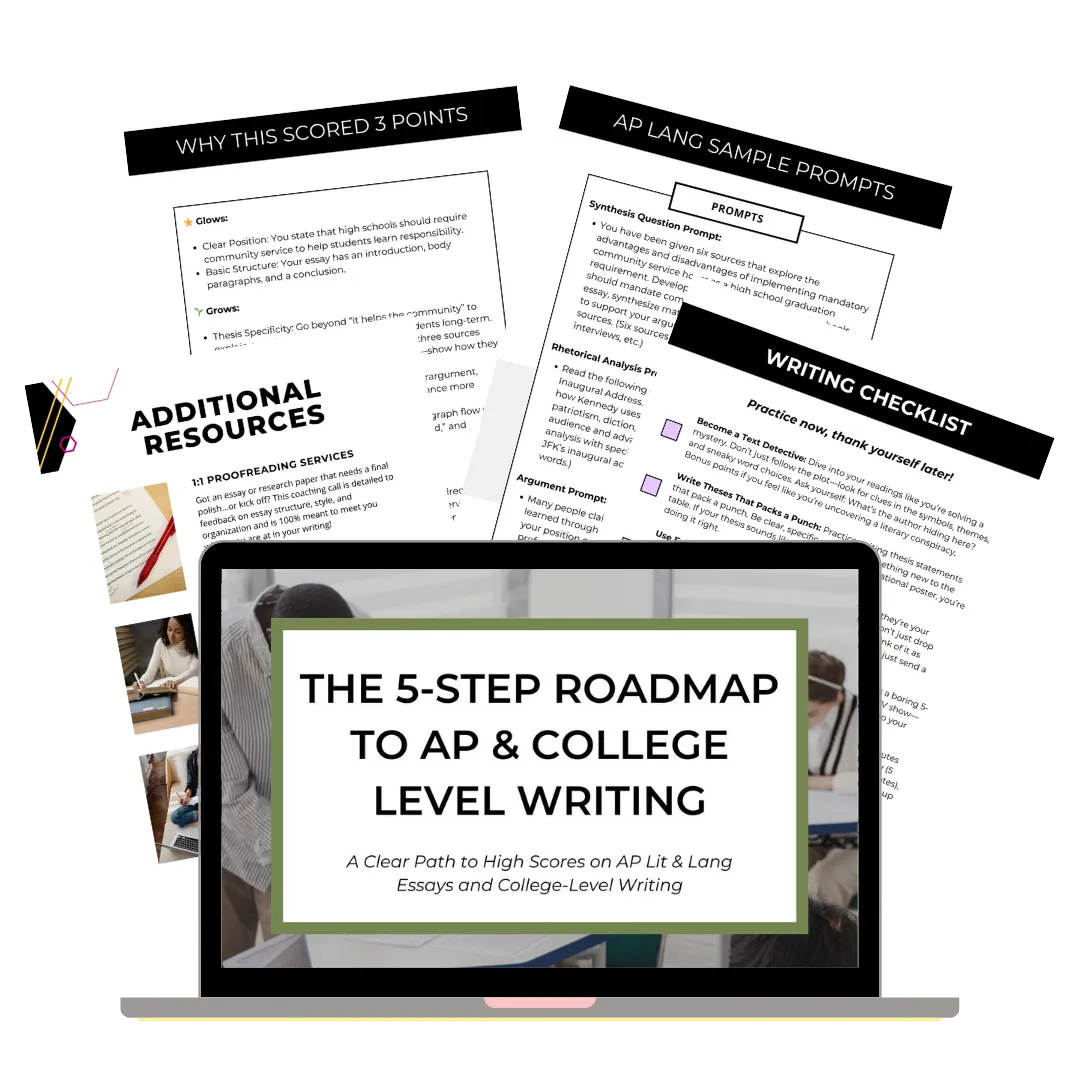
5-Step Roadmap to AP Writing
A clear path to higher AP Lit & Lang essay scores, stronger college-level writing skills, and lasting confidence.
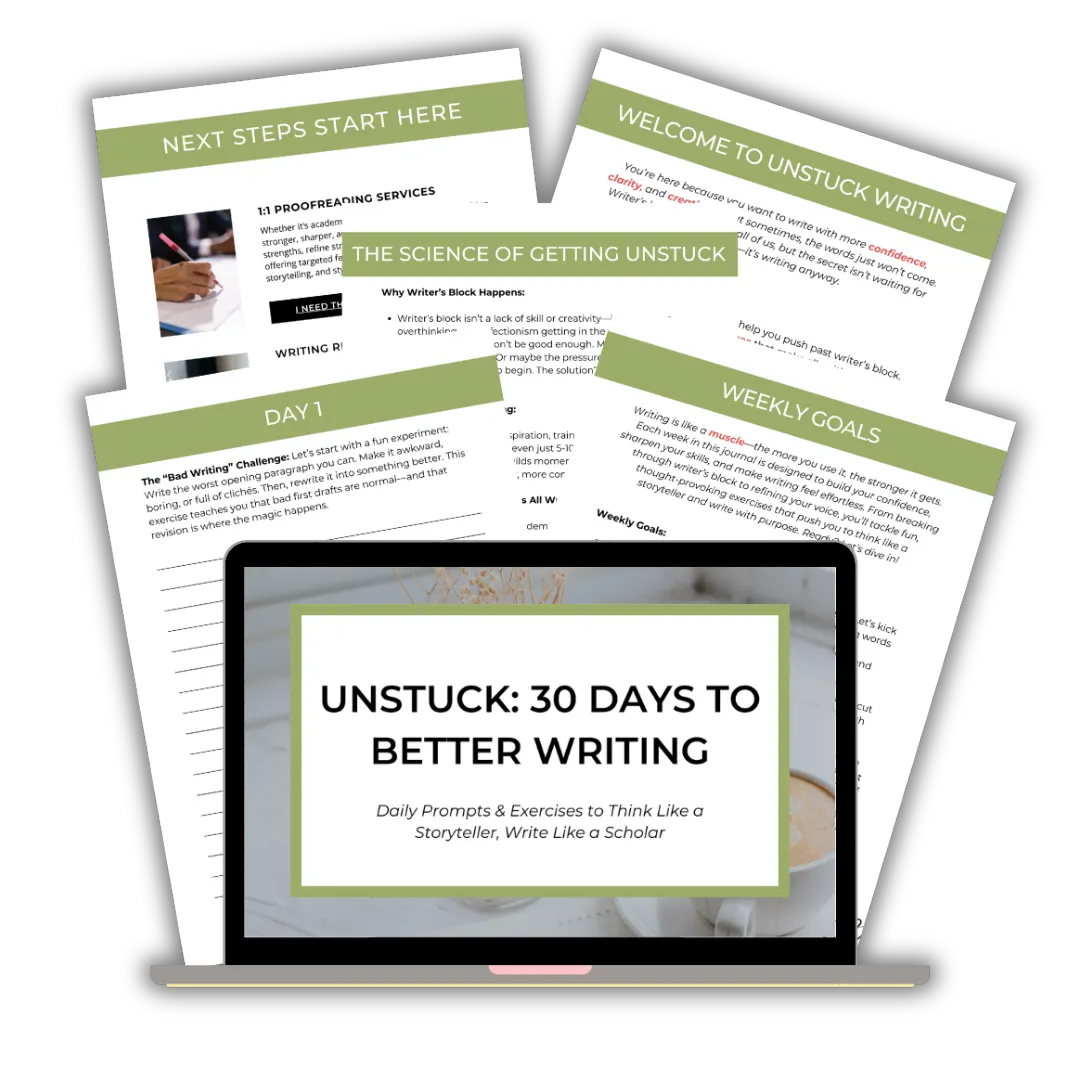
Unstuck: 30 Days of Writing
Daily prompts and exercises to help students get unstuck, build confidence, and write like a storyteller and scholar.
Start here with a few of my favorite tools. Want more?
Dive into the full resource library and keep building your skills.
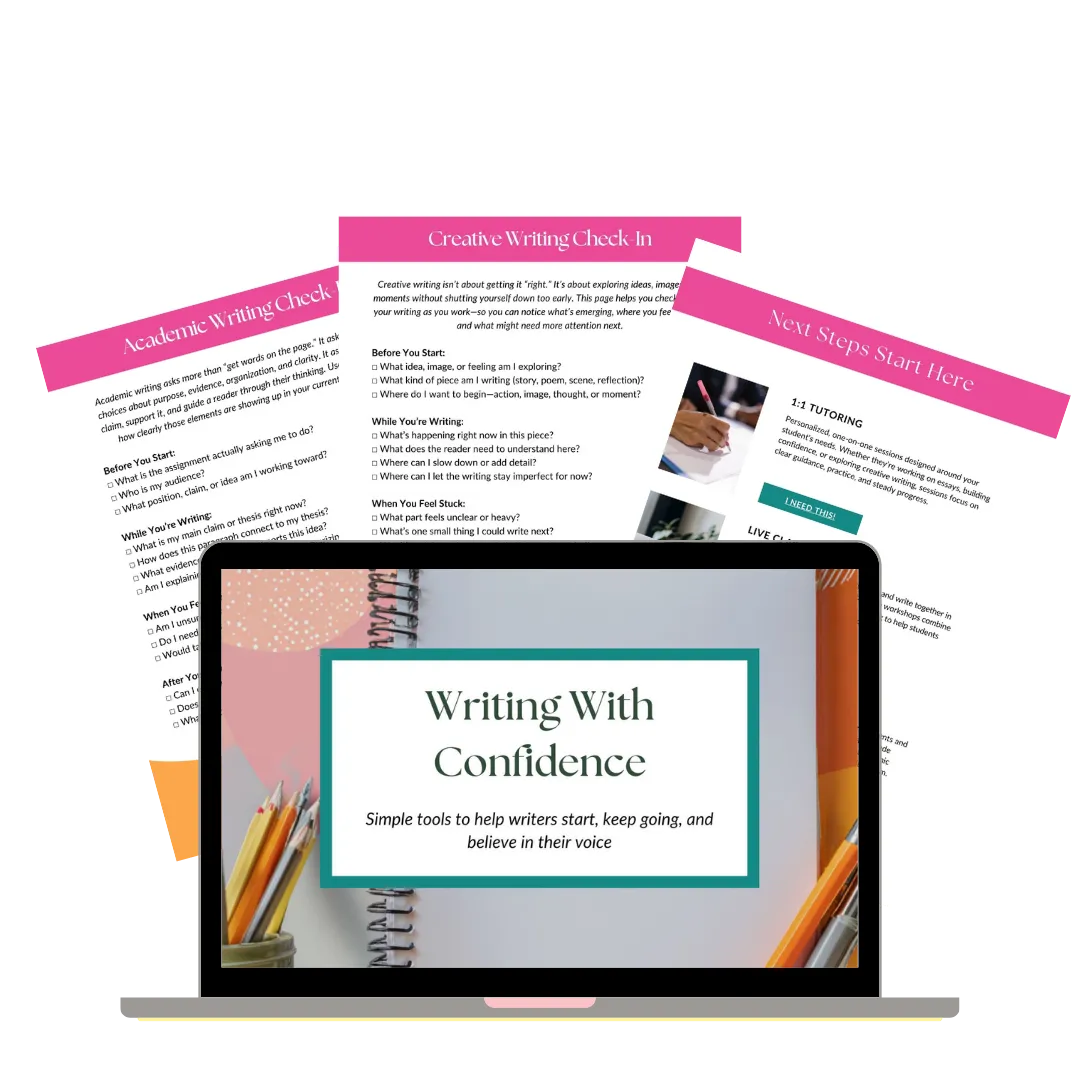
Writing With Confidence
Struggling with writing doesn’t mean a student can’t write. It usually means they don’t know what to do next. This FREE workbook helps uncover the missing steps, build confidence, and make the writing process manageable.
Writing With Diana: A Blog for Writers
If writing ever feels confusing or frustrating, writers aren’t alone. Writing With Diana helps writers build confidence and real writing skills through clear guidance, real examples, and strategies that actually work.

From Passive to Powerful
From Passive to Powerful: Energizing Your Writing With Active Voice
Let’s face it: passive voice is like decaf coffee—technically “works,” but it leaves everyone underwhelmed. I used to sprinkle dreamy passives all over my MFA drafts, and I’ve seen students nod off when I read them aloud in class. As a coach, I’ve hunted down more “was”s than I care to count—and passive voice is a known prose killer. Active voice? That’s the espresso shot your storytelling craves. Here’s the gritty, lived-and-burned advice—packed with personal anecdotes, a dash of sarcasm, and editing tips that actually get results.
Understand Passive vs. Active
Passive voice: The subject receives the action.
“The final exam was completed by the students.” (Snooze.)Active voice: The subject performs the action.
“The students completed the final exam.” (Readers snap awake!)
In my first year of teaching freshman English, I was passing back essays on symbolism—full of promising ideas, buried under a mountain of passives. When I handed one back to a moody sophomore, she slammed it on her desk and shot me a look. “Why did I get a C on this paper?” she demanded, arms crossed.
I flipped it over, pointed out the five “was”s crammed into three sentences, and said with a grin, “Your reader’s in a coma—wake them up with active verbs.” She rolled her eyes, but by the next class, her revised essay practically crackled off the page. She even grinned, “Okay, this is way more fun.” That moment taught me: a little tough love and a few active verbs can resurrect any sleepy prose.
Audit Your Draft for "To Be" + Past Participle
During my stint as a college writing instructor, I once coached a student who had seven “was(s) in a single sentence—seven! “I thought you said you were trimming word count,” I joked. We spent an hour recasting everything into an active voice, and by the end, her 2000-word essay read like a thriller.
Try this before you hit submit:
Search for “am,” “is,” “are,” “was,” “were,” “be,” “being,” “been.”
Ask: Can I recast this in active voice?
Before: “A decision was reached by the board after hours of debate.”
After: “After hours of debate, the board reached a decision.”
Bam—clarity and clear writing in one edit.
Prioritize Clarity and Agency
As a workshop facilitator for instructors learning to bring creative writing techniques into their own disciplines, I handed everyone the same climactic scene and dared them to strip out all the passives. A not-so-thrilled history professor in the back grunted, “Fine,” then paused, brow furrowed. His original line read: “The treaty was signed by the delegates amid great fanfare.” He muttered, “This reads like a textbook—someone put me to sleep.”
So he ripped out “was signed by the delegates” and wrote: “The delegates signed the treaty amid cheers and swirling confetti.” Then he added a breadcrumb of context—“Their hands shook as ink touched parchment”—to layer in sensory storytelling. At our next read-aloud, the room leaned in; you could almost hear the crackle of excitement.
He later confessed that he’d applied the same active-voice makeover to his syllabus: turning “Lab reports were submitted by students” into “Students submitted lab reports,” then weaving in vivid anecdotes about fieldwork. Suddenly, his lectures felt more like narratives, and student engagement went up. That’s the magic of active voice—it jolts your dynamic prose awake and shows how writing tips from fiction can transform any discipline.
Combine Action with Emotion
I still remember the late-night Zoom workshop with Sarah, a novelist who swore she’d “never write another active sentence.” Her tired first draft line:
“The gift was opened by Elena.”
I couldn’t resist a mock yawn. “Let’s inject some life, shall we?” I asked. We paused and asked: what’s Elena feeling? Smell? Sound? We brainstormed for two minutes, then rewrote:
“Elena tore into the gift, her heart hammering as glitter drifted down like confetti.”
Her eyes went wide. “I can actually hear that glitter hit the floor.” In that moment, her whole scene sprang to life—charged with sensory storytelling and unstoppable momentum.
Try This: From Passive to Pulse
Spot a bland passive sentence in your draft.
Ask “So what?” (What emotion or detail is missing?)
Add an emotion tag + sensory detail to transform it.
Before: “The invitation was accepted by Maria.”
After: “Maria accepted the invitation, her fingers trembling as she tucked it into her journal.”
By focusing on active voice and vivid details, you’ll turn flat descriptions into moments that jump off the page. Give it a try—your readers will thank you!
Use Passive Sparingly, Especially When You Want to Haunt Your Reader
Believe it or not, passive voice can be your secret weapon—if you wield it like a scalpel. In a late-night flash fiction binge, I wrote one of my eeriest pieces entirely from a passive angle. My opening line:
“The door was left ajar.”
That single passive construction cast a shadow of mystery without naming an actor or motive. Readers emailed me weeks later, asking what lurked behind that door. Mission accomplished.
But here’s the editorial catch: use passive only when you’re intentionally hiding the character or cranking up suspense. Otherwise, you’re just lulling your audience back to sleep.
Strategic Passive Examples for Suspense Writing
“All evidence had been erased.”
“The watch was found underwater, its hands stopped at midnight.”
Each of these sentences shifts focus to the event itself—erasure, the stillness of time—inviting readers to fill in the blanks.
Coaching Tip:
Identify a moment of tension in your draft.
Ask: Do I want to obscure who did this?
If yes, try a passive construction.
If no, default back to active voice for clarity and energy.
Use strategic passive voice like a spice—just enough to flavor your creative storytelling without overwhelming the dish.
Your Challenge This Week:
Choose one chapter and launch a passive-voice purge with ruthless self-editing. Channel your inner drill sergeant—read backward, apply the “So what?” test, and celebrate every sentence you revitalize.
Happy editing, and may your active voice always pack a punch!
🖤 Diana
📌 Follow my journey & get exclusive writing resources:
🔗 Join my newsletter
📚 Explore my resources
📖 Follow me on Instagram
Every story starts with a single word. Make yours unforgettable.

Frequently Asked Question
General Questions
What subjects do you offer tutoring in?
I offer English tutoring across all grade levels, from middle school through college, including AP Lit and AP Lang test preparation and support in key areas such as reading comprehension, academic and creative writing, grammar and composition, rhetorical analysis, and research skills.
Are sessions conducted online or in-person?
All tutoring sessions and live classes are online.
Can I customize the tutoring schedule?
Yes! I offer flexible scheduling to fit your availability, ensuring that learning fits seamlessly into your student's routine.